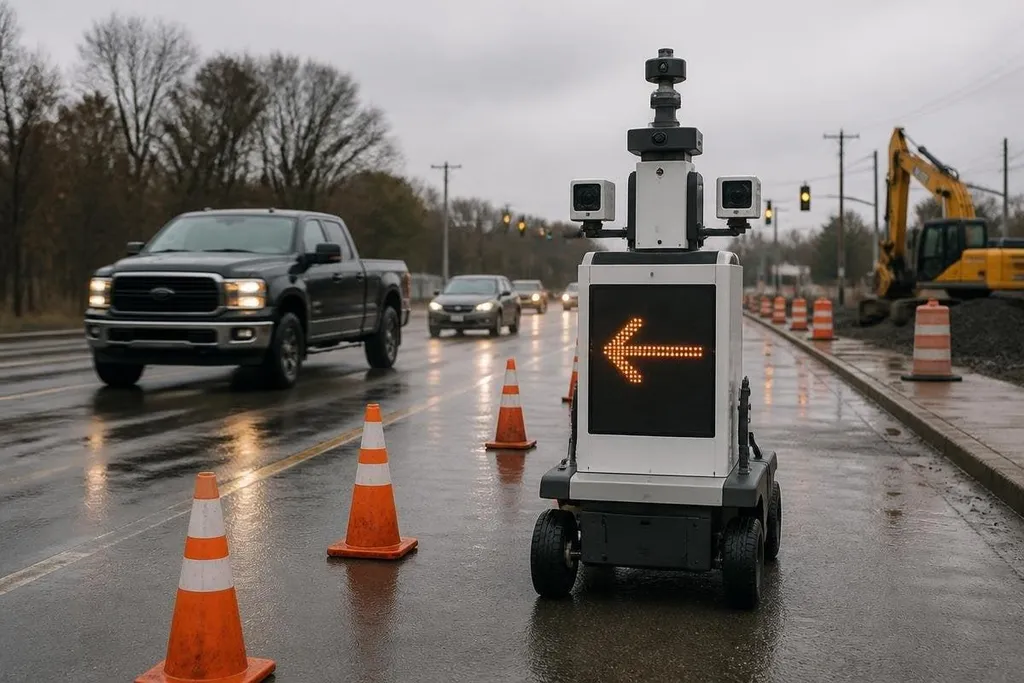
A traffic robot can spot a vehicle, read a signal, or guide cars through a work zone. The hard part is making those actions safe when rain, glare, blocked signs, and human mistakes arrive together.
This article looks at the tests that should decide which traffic robots deserve a place on public roads.
- A camera sees lane markings and signs, but glare can reduce its view.
- Radar measures distance and speed when visibility drops.
- A traffic robot must connect its sensor readings to the signal controller and a safe fallback.
What a traffic robot has to do
The phrase covers several machines. A roadside unit might count vehicles at an intersection, while an autonomous vehicle may handle the steering and braking itself. Those jobs need different hardware, software, and safety checks.
A useful system starts with a clear task. Counting cars needs a camera and software that can separate a cyclist from a parked vehicle. Detecting a fast approach may call for radar, which measures movement through rain and darkness.
LiDAR can add a 3D view, but the buyer needs to know how the sensor works in dust, snow, and direct sunlight.
The traffic robot also needs a way to act on what it sees. A signal controller can change the light phase, while vehicle-to-everything communication, known as V2X, can send warnings to nearby cars. Each link adds another point where a delay or bad message can create danger.
The road test matters more than the demo
A short video can show a robot handling one planned event. It says little about months of work beside real traffic. A serious test should record the site, weather, traffic volume, sensor setup, remote support, and every safety stop.
The numbers should be easy to check. Buyers need the detection rate for cars, bicycles, and people; the false alarm rate; the response time; and the number of hours the system ran without a human taking over. A result without those details is a product claim, not a road result.
A traffic robot can look ready in a closed test and still miss a cyclist at a busy junction. Traffic robotics reporting from Robot24.com can tie each claim to the road layout, test date, sensor setup, and human takeover rate. That record leads into the next section, where these systems can fail.
Where the systems can fail
Traffic scenes change faster than a test track. A delivery truck can block a camera. Sunlight can wash out a lens. Road markings can fade, and a cyclist may move through a space the software did not expect.
The safe response is not a promise that the robot will understand every case. It is a defined fallback. The system might hold the signal, warn a control room, slow a vehicle, or hand the task to a trained operator. The maker should state which action happens, how fast it starts, and what the public sees during the handoff.
Cybersecurity matters too. A traffic robot connected to a signal controller needs access rules, signed software updates, and records of commands. Those details affect road safety because a bad message can change vehicle movement without any broken sensor.
How to compare products and projects
A city engineer or fleet manager can use this checklist before approving a trial:
- Name the task: Count vehicles, manage signals, warn drivers, or control a vehicle.
- Request test records: Ask for raw counts, false alarms, response times, and takeover events.
- Check the fallback: Confirm what happens after a lost sensor feed, network link, or power supply.
- Inspect the site: Match the test road to the lanes, weather, traffic mix, and lighting at your location.
- Set a stop rule: Define the safety result that ends the trial before people or vehicles face added risk.
- Price the full system: Include sensors, signal work, network service, operators, updates, and maintenance.
The strongest project will have a narrow task, a named test site, and records that another team can inspect. A broad promise about safer traffic is weaker than a measured result from one intersection.
I'd skip any traffic robot that cannot state its fallback action and publish its road-test limits. The global race will be decided by systems that keep working after the camera is dirty, the network drops, and the road stops behaving like the demo.