

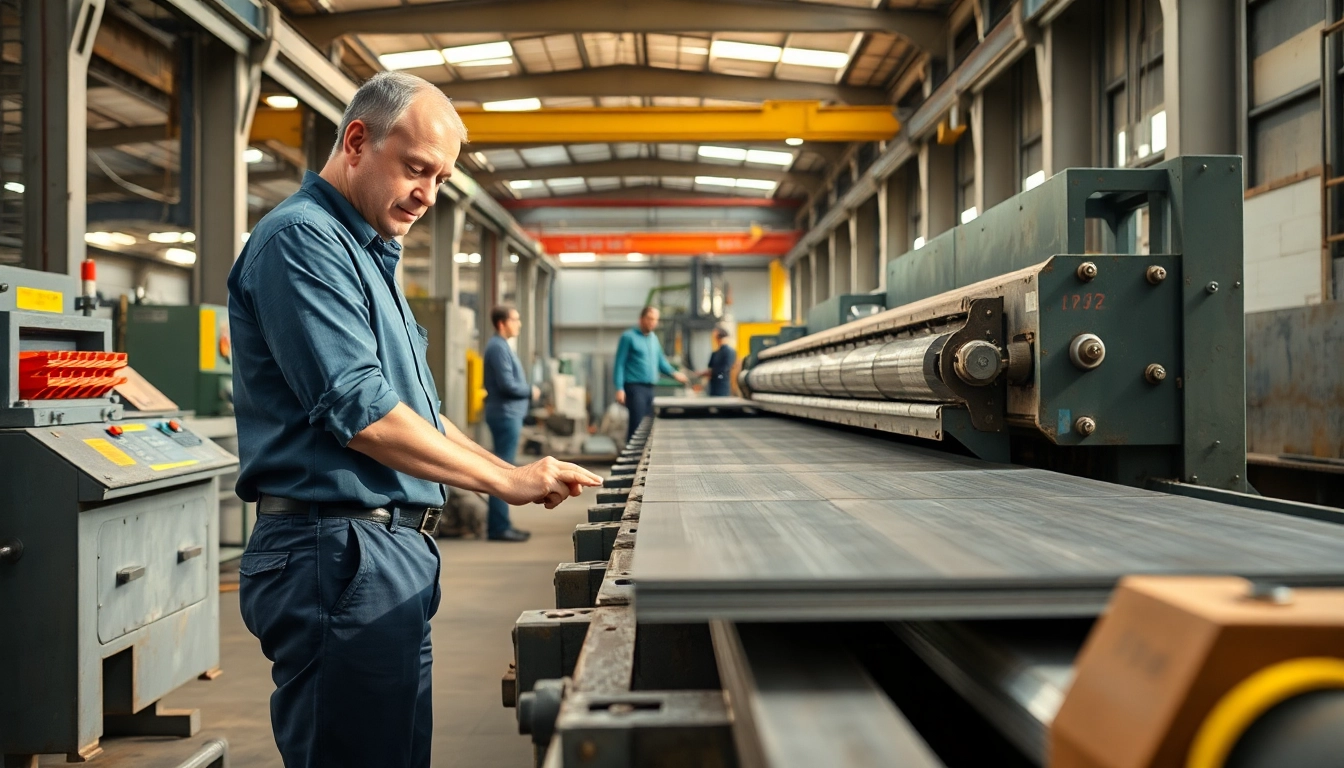
In the world of metal fabrication, plate rolling plays a crucial role in shaping raw materials into functional forms. The process transforms flat metal sheets into curved or cylindrical shapes, which are essential in various industries. This comprehensive guide will take you through the aspects of plate rolling, covering its definition, techniques, applications, and the factors influencing its efficiency.
What is Plate Rolling?
Definition and Overview of Plate Rolling
Plate rolling is a metalworking process that involves bending flat metal sheets into specific shapes, such as cylinders, arcs, or cones. This is achieved by passing the material between rollers. The method is widely used in industries that require customized metal shapes. It allows manufacturers to create parts with precise dimensions and angles, essential for structural integrity and performance.
How Plate Rolling Works
The plate rolling process begins with a flat piece of metal, which is fed into a machine known as a plate roller. Depending on the design and configuration of the roller, the metal is subjected to various forces that gradually bend it into the desired shape. The rollers can be aligned to achieve specific curves or edges, allowing for flexibility depending on the requirements.
Applications of Plate Rolling in Industries
Plate rolling serves a diverse range of applications across multiple sectors. In the construction industry, plate rolling is vital for manufacturing beams and columns. Similarly, in shipbuilding, it is used to create hulls and tanks that require robust structural components. Additionally, the aerospace and automotive industries also depend on plate rolling to create parts crucial for performance and safety.
Types of Plate Rolling Techniques
Four-Roller Plate Rolling
The four-roller plate rolling technique is commonly employed for large, thick plates where maximum precision is required. This method uses four rollers, where the two lower rollers serve as the supporting base while the upper roller exerts pressure to bend the plate. This configuration ensures better control over the radius and curvature, allowing for more complex and accurately rolled shapes.
Three-Roller Plate Rolling
In the three-roller plate rolling method, one top and two bottom rollers are used. This system is more economical for smaller projects or for thinner materials. The top roller moves up and down to create the desired bend in the plate. This method provides good results for applications where less precision is acceptable, making it ideal for simpler products.
Two-Roller Plate Rolling
The two-roller plate rolling approach is the simplest form, utilizing just two rollers to create a bend. This technique is often used for smaller, less complex shapes and is suitable for quick projects. While it may not provide the same level of accuracy as other methods, it is beneficial for basic designs where cost-effectiveness is crucial.
Factors Influencing Plate Rolling Efficiency
Material Type and Thickness
The type of metal being rolled significantly impacts the efficiency of the process. Different metals have varying stiffness, tensile strength, and malleability, which influence how well they can be shaped. Additionally, the thickness of the material must be considered since thicker plates require more power and can often be more challenging to roll.
Roller Design and Configuration
The design and arrangement of the rollers play a crucial role in achieving accurate results in plate rolling. The diameter and shape of the rollers affect the level of pressure applied, the type of curvature achievable, and the overall quality of the final product. Innovations in roller design, such as adjustable configurations, enhance the flexibility and performance of plate rolling systems.
Temperature Effects on Metal Properties
The temperature of the metal can influence its properties during rolling. For instance, heating the metal can enhance its ductility, making it easier to bend without cracking. Conversely, cooling may increase hardness but can also result in brittleness, leading to potential failures during the rolling process. Understanding these temperature effects is essential for optimizing plate rolling operations.
Measuring Success in Plate Rolling Projects
Quality Control Standards
Quality control is paramount in plate rolling. Adhering to stringent quality control standards ensures that the final product meets specific requirements. This includes checking tolerances, verifying dimensions, and conducting tests on resilience. Quality assurance processes help in identifying any deviations and ensuring consistency across production batches.
Common Metrics for Performance Evaluation
To assess the effectiveness of plate rolling projects, certain metrics can be applied. These may include the percentage of defects, the time taken per roll, and material waste. Tracking these metrics enables organizations to identify inefficiencies and implement improvements, thereby enhancing overall productivity.
Client Satisfaction: Key Indicators
Client satisfaction is often the ultimate measure of success for plate rolling projects. Regular feedback from clients regarding their requirements, expectations, and experiences helps gauge success. Meeting deadlines and achieving high-quality outputs are fundamental indicators that reflect the reliability and effectiveness of the plate rolling services provided.
FAQs about Plate Rolling
What is the rolling plate method?
The rolling plate method employs heavy-duty rolls to bend metal plates into various shapes, like cylinders, providing flexibility for different thicknesses and applications.
How to calculate plate rolling?
To calculate plate rolling lengths, you can use the formula L = [(2 × t × R) + t] × (π × D), rearranging it based on your desired bend radius.
What are the three types of rolling?
The main types of rolling methods in plate fabrication are four-roller, three-roller, and two-roller systems, each presenting distinct advantages for specific shapes.
What are plate rolling capabilities?
Plate rolling capabilities encompass the techniques and equipment used to transform flat metal sheets into curved or cylindrical shapes through effective bending processes.
What industries typically use plate rolling?
Industries such as construction, shipbuilding, aerospace, and automotive frequently utilize plate rolling for creating structures, components, and machinery parts.
Contact Information
Call Us: 780-955-3999
Email: [email protected]
Address: 1204 8 St, Nisku, AB T9E 7M1